How Can I Prevent Acne? A Comprehensive Guide To Having Clearer Skin In The USA
Quote from zorathomas on September 15, 2026, 1:31 amAcne is a prevalent condition in the USA. It is a problem that can happen during the teenage years, but adults may also suffer from pimples, blackheads, whiteheads, cysts, and nodules. The great thing about acne is that it is easy to treat and manage by using the correct skin care and treatment.
There are a number of things you can do yourself to get rid of acne; however, in cases where you have severe acne you will need prescription medications. Isotretinoin might be one of such prescription medicines for severe acne.
Causes Of Acne
The reason why acne appears is that the hair follicles get blocked by the oil and dead skin cells.
Some common triggers for breakouts include the following:
- Overproduction of sebum
- Blocked pores
- Hormonal imbalances
- Prescribed medication
- Stress
- Irritation from certain products
- Bursting of blemishes
- Genetic factors
Breakouts do not have the same triggers all the time, and different kinds of acne need to be treated differently.
How Do I Stop Acne?
Establishing a proper routine can go a long way towards achieving clear skin. In general, dermatologists advise that acne-prone skin should be washed gently two times per day and after exercise. Excessive scrubbing may lead to irritation of the skin and may exacerbate breakouts.
Step 1: Gentle Cleansing
Use a mild cleanser and wash your face gently using your fingers. Avoid washing multiple times during the day.
2. Use Non-Comedogenic Products
Select skincare and makeup products that are described as non-comedogenic because they are less likely to block pores.
In addition to exfoliation, the use of moisturizers is necessary because many acne medications cause drying. Therefore, you need to find a light non-comedogenic moisturizer.
3. Don’t Pick at Pimples
Although it is tempting to squeeze a pimple, it increases inflammation, and you may have scarring and dark spots.
4. Be Patient about Using the Product
Acne treatment is not effective immediately. Switching to a new product every couple of days irritates your skin. According to the American Academy of Dermatology, it takes several weeks to see the first improvement, while a few months are required for visible clearing.
When Is Isotretinoin Prescribed for Acne?
Isotretinoin is an oral medication, a retinoid prescribed mainly for severe cases of acne with deep and painful nodules and cysts that do not respond to other methods of treatment. This treatment acts on several causes of acne, which include excessive oil production, clogged pores, bacteria, and inflammation.
If you have severe acne that does not react to proper treatment, a dermatologist may prescribe you isotretinoin for acne.
What Is Isotretinoin 40 mg?
Isotretinoin 40 mg is the strength of isotretinoin which can be found in prescription forms. Nevertheless, the right dosage depends on various factors of the patient, including his/her health status, reaction to the medication, etc., and it should be determined individually by a healthcare specialist.
For this reason, it is strictly forbidden to begin, discontinue or change the dosage of isotretinoin 40 mg capsules without proper consultation.
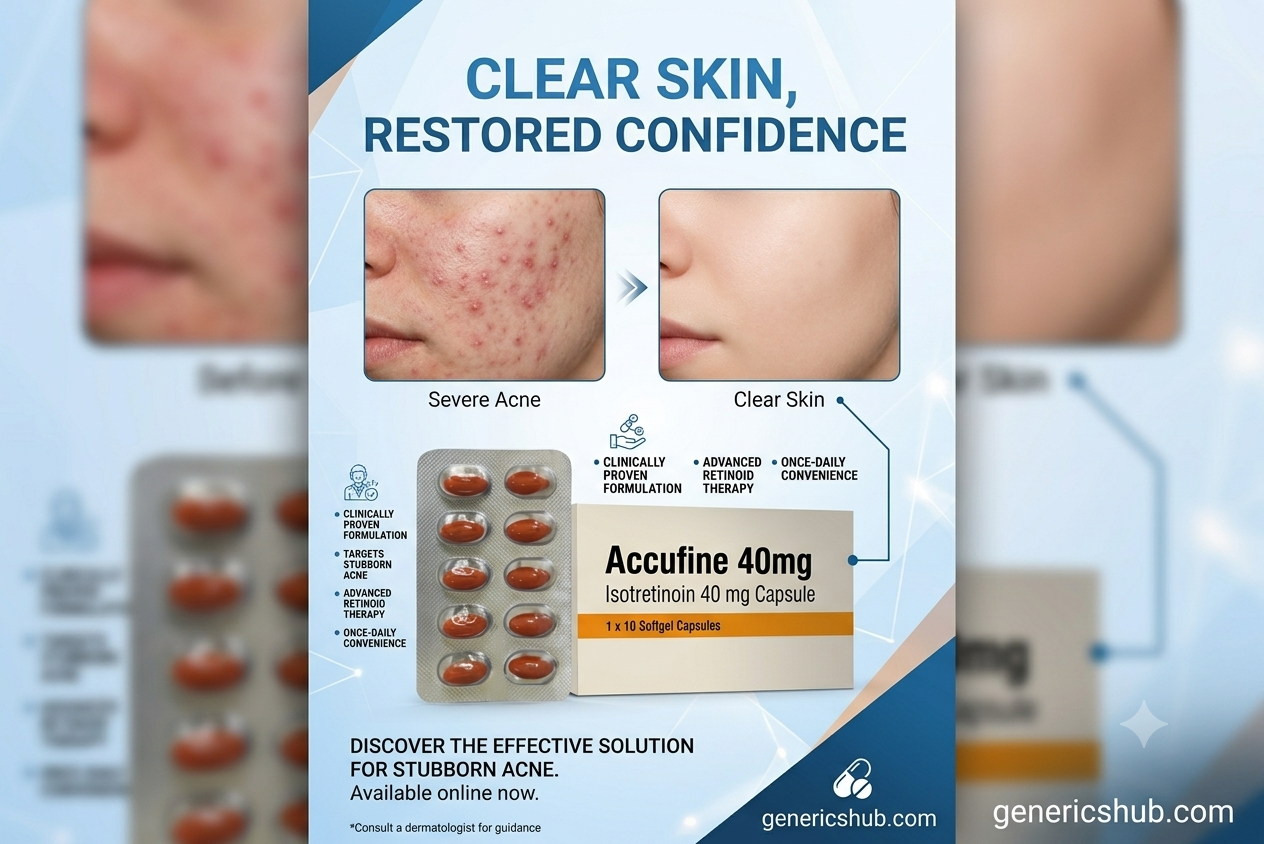
You may also come across searches for Accufine 40mg, Accufine 40mg softgel capsule, isotretinoin, and Accufine. Brands' availability varies among different countries, but the FDA offers a list of isotretinoin products that include the following brands: Absorica, Absorica LD, Amnesteem, Claravis, Myorisan, and Zenatane.
In case you need isotretinoin 40 mg price in the USA, keep in mind that it will depend on many aspects, including the chosen brand, pharmacy, insurance, and others.
Is Isotretinoin Safe?
Isotretinoin is highly effective, but it is a potent medication that needs to be taken under medical care. Isotretinoin, in the United States, falls under the iPLEDGE REMS risk management program of the FDA.
One of the most significant risks of isotretinoin is its harmful effect on a developing fetus. Isotretinoin can cause birth defects. It is not prescribed in pregnancy. People who are capable of becoming pregnant are expected to comply with pregnancy prevention and monitoring requirements.
Dermatologists may also monitor laboratory tests such as lipid levels, liver function, etc.
Common Isotretinoin Side Effects
One of the most common side effects of isotretinoin is dryness. Dryness includes:
- Chapped or dry lips
- Skin dryness
- Eye dryness and irritation
- Nose bleeds
- Sun sensitivity
- Pain in joints and muscles
- Elevated cholesterol
- Laboratory abnormalities related to the liver
Worsening acne symptoms may occur in the first few weeks of taking isotretinoin. It is temporary but should still be reported to the treating dermatologist.
Use of moisturizers, lip balms, gentle skincare products, and sun protection can help deal with some of the side effects of isotretinoin.
Isotretinoin - What Should Be Avoided?
When prescribed by a dermatologist, always follow the instructions included in the prescription letter.
You should:
- Provide your physician with information on all drugs and supplements you use.
- Observe the needed monitoring visits.
- Avoid pregnancy according to the iPLEDGE rules.
- Protect yourself from overexposure to the sun.
- Use only gentle skincare products.
- Consult your healthcare provider regarding any unwanted symptoms.
FDA explicitly advises not to acquire isotretinoin from sites selling prescription medications without proper medical approval.
When to Visit a Dermatologist?
Think of visiting a dermatologist when your acne is:
- Painful or deep
- Leaving scars
- Worsening even while being treated
- Causing any psychological impact on you
- Persisting despite the appropriate skincare
- Sudden and adult-onset
A dermatologist will help to identify whether it is acne or other skin problem and prescribe adequate treatment.
Frequently Asked Questions
1. Is there any way to prevent acne forever?
No, there is no surefire way to stop acne from ever coming back. Yet, maintaining proper skin hygiene and seeking the right kind of treatment will minimize acne occurrences. In some cases of severe acne, patients are known to have sustained periods of clearance after taking isotretinoin.
2. Is isotretinoin good for acne?
Isotretinoin is a powerful medication that can provide significant benefits to people with severe acne, especially where all other methods of treatment fail. Isotretinoin is not usually considered as a go-to treatment option for mild forms of acne.
3. What is the use of isotretinoin 40 mg capsules?
The isotretinoin 40 mg capsule has 40 mg of isotretinoin in its composition and may be prescribed as a means of treating severe cases of acne.
4. Is Accufine 40 mg the same as isotretinoin?
Accufine is a brand name of isotretinoin used in certain countries. Brand names and availability vary from country to country. Patients in the United States should always verify the actual medication and the active substance in the prescription and on the drug label.
5. How long does it take to undergo isotretinoin therapy?
A usual course lasts about four to five months, but sometimes it may be shorter or longer.
6. Does acne worsen when taking isotretinoin?
Yes. In some patients, acne will get temporarily worse during the first one to two months. Should this occur, consult your dermatologist rather than adjusting the dose.
Conclusion
Acne treatment takes patience, persistence, and proper therapy for your skin. Proper cleansing, non-comedogenic care, refraining from picking pimples, and waiting long enough may decrease acne breakouts. In case of very severe acne that does not respond to other measures, isotretinoin for acne therapy may be used under the strict supervision of your dermatologist.
If you are searching for isotretinoin 40 mg, isotretinoin 40 mg capsule, Accufine 40mg, or Accufine 40mg softgel capsule, then talk to a professional healthcare provider in the United States prior to taking any form of prescription isotretinoin. Since isotretinoin has special safety precautions, you should never take isotretinoin by yourself.
Acne is a prevalent condition in the USA. It is a problem that can happen during the teenage years, but adults may also suffer from pimples, blackheads, whiteheads, cysts, and nodules. The great thing about acne is that it is easy to treat and manage by using the correct skin care and treatment.
There are a number of things you can do yourself to get rid of acne; however, in cases where you have severe acne you will need prescription medications. Isotretinoin might be one of such prescription medicines for severe acne.
Causes Of Acne
The reason why acne appears is that the hair follicles get blocked by the oil and dead skin cells.
Some common triggers for breakouts include the following:
- Overproduction of sebum
- Blocked pores
- Hormonal imbalances
- Prescribed medication
- Stress
- Irritation from certain products
- Bursting of blemishes
- Genetic factors
Breakouts do not have the same triggers all the time, and different kinds of acne need to be treated differently.
How Do I Stop Acne?
Establishing a proper routine can go a long way towards achieving clear skin. In general, dermatologists advise that acne-prone skin should be washed gently two times per day and after exercise. Excessive scrubbing may lead to irritation of the skin and may exacerbate breakouts.
Step 1: Gentle Cleansing
Use a mild cleanser and wash your face gently using your fingers. Avoid washing multiple times during the day.
2. Use Non-Comedogenic Products
Select skincare and makeup products that are described as non-comedogenic because they are less likely to block pores.
In addition to exfoliation, the use of moisturizers is necessary because many acne medications cause drying. Therefore, you need to find a light non-comedogenic moisturizer.
3. Don’t Pick at Pimples
Although it is tempting to squeeze a pimple, it increases inflammation, and you may have scarring and dark spots.
4. Be Patient about Using the Product
Acne treatment is not effective immediately. Switching to a new product every couple of days irritates your skin. According to the American Academy of Dermatology, it takes several weeks to see the first improvement, while a few months are required for visible clearing.
When Is Isotretinoin Prescribed for Acne?
Isotretinoin is an oral medication, a retinoid prescribed mainly for severe cases of acne with deep and painful nodules and cysts that do not respond to other methods of treatment. This treatment acts on several causes of acne, which include excessive oil production, clogged pores, bacteria, and inflammation.
If you have severe acne that does not react to proper treatment, a dermatologist may prescribe you isotretinoin for acne.
What Is Isotretinoin 40 mg?
Isotretinoin 40 mg is the strength of isotretinoin which can be found in prescription forms. Nevertheless, the right dosage depends on various factors of the patient, including his/her health status, reaction to the medication, etc., and it should be determined individually by a healthcare specialist.
For this reason, it is strictly forbidden to begin, discontinue or change the dosage of isotretinoin 40 mg capsules without proper consultation.
You may also come across searches for Accufine 40mg, Accufine 40mg softgel capsule, isotretinoin, and Accufine. Brands' availability varies among different countries, but the FDA offers a list of isotretinoin products that include the following brands: Absorica, Absorica LD, Amnesteem, Claravis, Myorisan, and Zenatane.
In case you need isotretinoin 40 mg price in the USA, keep in mind that it will depend on many aspects, including the chosen brand, pharmacy, insurance, and others.
Is Isotretinoin Safe?
Isotretinoin is highly effective, but it is a potent medication that needs to be taken under medical care. Isotretinoin, in the United States, falls under the iPLEDGE REMS risk management program of the FDA.
One of the most significant risks of isotretinoin is its harmful effect on a developing fetus. Isotretinoin can cause birth defects. It is not prescribed in pregnancy. People who are capable of becoming pregnant are expected to comply with pregnancy prevention and monitoring requirements.
Dermatologists may also monitor laboratory tests such as lipid levels, liver function, etc.
Common Isotretinoin Side Effects
One of the most common side effects of isotretinoin is dryness. Dryness includes:
- Chapped or dry lips
- Skin dryness
- Eye dryness and irritation
- Nose bleeds
- Sun sensitivity
- Pain in joints and muscles
- Elevated cholesterol
- Laboratory abnormalities related to the liver
Worsening acne symptoms may occur in the first few weeks of taking isotretinoin. It is temporary but should still be reported to the treating dermatologist.
Use of moisturizers, lip balms, gentle skincare products, and sun protection can help deal with some of the side effects of isotretinoin.
Isotretinoin - What Should Be Avoided?
When prescribed by a dermatologist, always follow the instructions included in the prescription letter.
You should:
- Provide your physician with information on all drugs and supplements you use.
- Observe the needed monitoring visits.
- Avoid pregnancy according to the iPLEDGE rules.
- Protect yourself from overexposure to the sun.
- Use only gentle skincare products.
- Consult your healthcare provider regarding any unwanted symptoms.
FDA explicitly advises not to acquire isotretinoin from sites selling prescription medications without proper medical approval.
When to Visit a Dermatologist?
Think of visiting a dermatologist when your acne is:
- Painful or deep
- Leaving scars
- Worsening even while being treated
- Causing any psychological impact on you
- Persisting despite the appropriate skincare
- Sudden and adult-onset
A dermatologist will help to identify whether it is acne or other skin problem and prescribe adequate treatment.
Frequently Asked Questions
1. Is there any way to prevent acne forever?
No, there is no surefire way to stop acne from ever coming back. Yet, maintaining proper skin hygiene and seeking the right kind of treatment will minimize acne occurrences. In some cases of severe acne, patients are known to have sustained periods of clearance after taking isotretinoin.
2. Is isotretinoin good for acne?
Isotretinoin is a powerful medication that can provide significant benefits to people with severe acne, especially where all other methods of treatment fail. Isotretinoin is not usually considered as a go-to treatment option for mild forms of acne.
3. What is the use of isotretinoin 40 mg capsules?
The isotretinoin 40 mg capsule has 40 mg of isotretinoin in its composition and may be prescribed as a means of treating severe cases of acne.
4. Is Accufine 40 mg the same as isotretinoin?
Accufine is a brand name of isotretinoin used in certain countries. Brand names and availability vary from country to country. Patients in the United States should always verify the actual medication and the active substance in the prescription and on the drug label.
5. How long does it take to undergo isotretinoin therapy?
A usual course lasts about four to five months, but sometimes it may be shorter or longer.
6. Does acne worsen when taking isotretinoin?
Yes. In some patients, acne will get temporarily worse during the first one to two months. Should this occur, consult your dermatologist rather than adjusting the dose.
Conclusion
Acne treatment takes patience, persistence, and proper therapy for your skin. Proper cleansing, non-comedogenic care, refraining from picking pimples, and waiting long enough may decrease acne breakouts. In case of very severe acne that does not respond to other measures, isotretinoin for acne therapy may be used under the strict supervision of your dermatologist.
If you are searching for isotretinoin 40 mg, isotretinoin 40 mg capsule, Accufine 40mg, or Accufine 40mg softgel capsule, then talk to a professional healthcare provider in the United States prior to taking any form of prescription isotretinoin. Since isotretinoin has special safety precautions, you should never take isotretinoin by yourself.
Uploaded files: