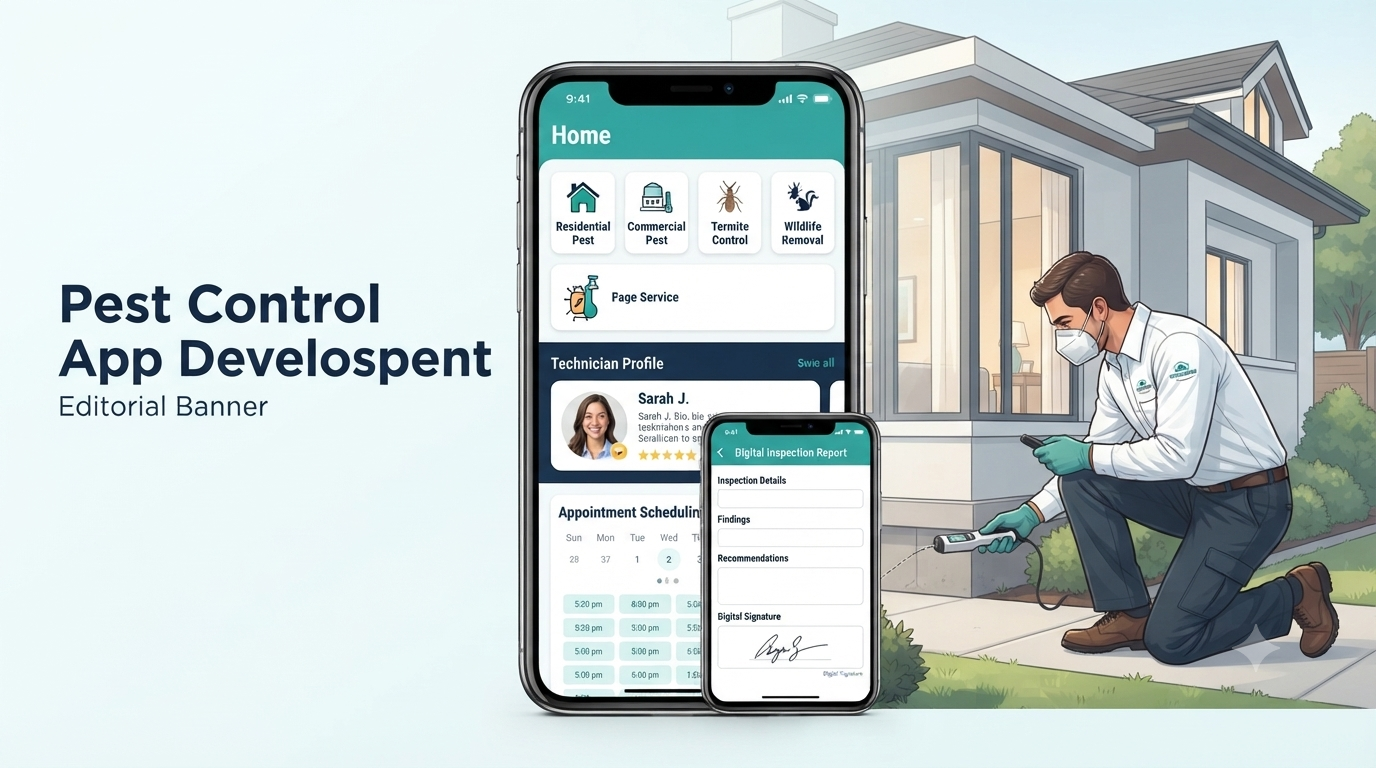
Pest Control App Development: Features, Benefits, Cost, and How Digital Platforms Can Improve Pest Management

Quote from FezalKhan on November 17, 2026, 3:07 amIntroduction
Pest problems can affect homes, offices, restaurants, warehouses, and public spaces. From termites and rodents to mosquitoes, ants, and cockroaches, pest infestations can create health concerns, damage property, and disrupt everyday activities.
Finding a reliable pest control professional is not always easy. Customers may need to contact several service providers, compare prices, arrange inspections, and follow up on treatment schedules.
Pest control applications can make this process more convenient by connecting customers with service professionals through a digital platform. They can also help pest control businesses organize appointments, manage technicians, and maintain customer records.
What Is Pest Control App Development?
Pest control app development is the process of creating a mobile or web application that helps customers find pest management services and allows service providers to manage their daily operations.
A typical application can support three main user groups:
Customers: Search for pest control services, request inspections, schedule appointments, and track service updates.
Pest control professionals: Manage service requests, visit schedules, customer details, and treatment records.
Administrators: Manage service providers, customers, bookings, payments, and platform operations.
The application can support residential pest control, commercial pest management, termite inspections, rodent control, mosquito treatment, and other related services.
Essential Features of a Pest Control Application
A useful pest control platform should focus on convenience, reliable service coordination, and clear communication.
1. Customer Registration and Profiles
Customers should be able to create accounts, save property information, manage contact details, and review previous service requests.
2. Service Categories
The application can organize services into categories such as termite treatment, rodent control, mosquito management, bed bug treatment, and general pest inspection.
3. Service Booking
Customers should be able to select a service, provide property details, choose a preferred date, and request an appointment.
4. Technician Profiles
Profiles can display service experience, supported service categories, availability, and customer feedback.
5. Location and Service Area Management
Location-based functionality can help customers identify providers who serve their area and help businesses assign technicians efficiently.
6. Appointment Scheduling
A scheduling system can help service providers manage inspections, treatment appointments, follow-up visits, and recurring maintenance.
7. Notifications and Reminders
Customers can receive booking confirmations, appointment reminders, service updates, and follow-up notifications.
8. Payment Integration
Secure payment options can allow customers to pay for completed or scheduled services, depending on the business model.
9. Service History and Reports
Customers can review previous treatments, while professionals can maintain records of inspections, service dates, and recommended follow-up actions.
10. Admin Dashboard
Administrators need tools to manage users, service providers, bookings, complaints, payments, and platform reports.
Benefits of Pest Control App Development
Digital pest management platforms can benefit both customers and service providers.
Convenience for Customers: People can discover services, request appointments, and communicate with providers without making multiple phone calls.
Better Scheduling: Digital calendars and booking management can reduce appointment confusion and missed visits.
Improved Business Organization: Service providers can organize customer information, technician assignments, and service histories in one place.
Transparent Communication: Booking updates and service records help customers understand what has been scheduled and completed.
Recurring Service Management: Businesses can organize periodic inspections and maintenance reminders for customers who need ongoing pest management.
How Much Does Pest Control App Development Cost?
The cost of building a pest control application depends on the features, platform requirements, integrations, and overall complexity.
Important cost factors include:
Application type: A basic booking application requires a different development effort from a complete multi-provider platform.
Design requirements: Custom dashboards and user-friendly interfaces influence design time.
Backend development: User management, booking workflows, databases, and service-provider dashboards affect complexity.
Third-party integrations: Maps, notifications, payment gateways, and communication tools can increase development effort.
Security: Customer details, property information, and payment records need appropriate protection.
Maintenance: Updates, hosting, monitoring, and technical support contribute to ongoing expenses.
Businesses should identify their essential requirements and prepare a development roadmap before estimating the final budget.
Common Challenges in Pest Control App Development
Developing a pest control platform involves more than adding a booking form.
Service Quality: Customers need reliable information about providers, services, and treatment options.
Technician Availability: The application must manage schedules and service areas accurately.
Customer Trust: Clear pricing information, reviews, service records, and communication can help build confidence.
Data Protection: Personal details, property addresses, and transaction records should be protected.
Treatment Information: Service descriptions should be accurate and should not replace professional inspections or safety instructions.
Business Scalability: The platform should be able to support additional technicians, locations, and service categories as the business grows.
Future Trends in Digital Pest Management
Technology can support more organized and responsible pest management practices.
AI-assisted recommendations: Applications may help organize customer reports and identify patterns in service requests.
Smart monitoring devices: Sensors and connected devices can help detect pest activity in suitable environments.
Predictive maintenance: Historical service records and environmental information may help providers plan inspections.
Digital inspection reports: Technicians can record observations, treatment details, and follow-up recommendations.
Location-based service coordination: Improved location tools can help businesses organize technician visits and reduce unnecessary travel.
These technologies should support professional judgment and responsible pest management rather than replace qualified inspections.
Final Thoughts
Pest control app development offers an opportunity to make pest management services easier to discover, schedule, and coordinate. A well-planned platform can connect customers with service professionals while helping businesses manage appointments, technician schedules, and treatment records.
The most useful applications will focus on customer convenience, transparent service information, responsible treatment practices, and reliable communication.
Digital tools cannot replace professional pest inspections, but they can make the process of arranging and managing pest control services more organized.
Discussion Question: What would make you more comfortable booking a pest control service through an application: verified professionals, transparent pricing, customer reviews, or digital treatment reports?
Introduction
Pest problems can affect homes, offices, restaurants, warehouses, and public spaces. From termites and rodents to mosquitoes, ants, and cockroaches, pest infestations can create health concerns, damage property, and disrupt everyday activities.
Finding a reliable pest control professional is not always easy. Customers may need to contact several service providers, compare prices, arrange inspections, and follow up on treatment schedules.
Pest control applications can make this process more convenient by connecting customers with service professionals through a digital platform. They can also help pest control businesses organize appointments, manage technicians, and maintain customer records.
What Is Pest Control App Development?
Pest control app development is the process of creating a mobile or web application that helps customers find pest management services and allows service providers to manage their daily operations.
A typical application can support three main user groups:
-
Customers: Search for pest control services, request inspections, schedule appointments, and track service updates.
-
Pest control professionals: Manage service requests, visit schedules, customer details, and treatment records.
-
Administrators: Manage service providers, customers, bookings, payments, and platform operations.
The application can support residential pest control, commercial pest management, termite inspections, rodent control, mosquito treatment, and other related services.
Essential Features of a Pest Control Application
A useful pest control platform should focus on convenience, reliable service coordination, and clear communication.
1. Customer Registration and Profiles
Customers should be able to create accounts, save property information, manage contact details, and review previous service requests.
2. Service Categories
The application can organize services into categories such as termite treatment, rodent control, mosquito management, bed bug treatment, and general pest inspection.
3. Service Booking
Customers should be able to select a service, provide property details, choose a preferred date, and request an appointment.
4. Technician Profiles
Profiles can display service experience, supported service categories, availability, and customer feedback.
5. Location and Service Area Management
Location-based functionality can help customers identify providers who serve their area and help businesses assign technicians efficiently.
6. Appointment Scheduling
A scheduling system can help service providers manage inspections, treatment appointments, follow-up visits, and recurring maintenance.
7. Notifications and Reminders
Customers can receive booking confirmations, appointment reminders, service updates, and follow-up notifications.
8. Payment Integration
Secure payment options can allow customers to pay for completed or scheduled services, depending on the business model.
9. Service History and Reports
Customers can review previous treatments, while professionals can maintain records of inspections, service dates, and recommended follow-up actions.
10. Admin Dashboard
Administrators need tools to manage users, service providers, bookings, complaints, payments, and platform reports.
Benefits of Pest Control App Development
Digital pest management platforms can benefit both customers and service providers.
Convenience for Customers: People can discover services, request appointments, and communicate with providers without making multiple phone calls.
Better Scheduling: Digital calendars and booking management can reduce appointment confusion and missed visits.
Improved Business Organization: Service providers can organize customer information, technician assignments, and service histories in one place.
Transparent Communication: Booking updates and service records help customers understand what has been scheduled and completed.
Recurring Service Management: Businesses can organize periodic inspections and maintenance reminders for customers who need ongoing pest management.
How Much Does Pest Control App Development Cost?
The cost of building a pest control application depends on the features, platform requirements, integrations, and overall complexity.
Important cost factors include:
-
Application type: A basic booking application requires a different development effort from a complete multi-provider platform.
-
Design requirements: Custom dashboards and user-friendly interfaces influence design time.
-
Backend development: User management, booking workflows, databases, and service-provider dashboards affect complexity.
-
Third-party integrations: Maps, notifications, payment gateways, and communication tools can increase development effort.
-
Security: Customer details, property information, and payment records need appropriate protection.
-
Maintenance: Updates, hosting, monitoring, and technical support contribute to ongoing expenses.
Businesses should identify their essential requirements and prepare a development roadmap before estimating the final budget.
Common Challenges in Pest Control App Development
Developing a pest control platform involves more than adding a booking form.
Service Quality: Customers need reliable information about providers, services, and treatment options.
Technician Availability: The application must manage schedules and service areas accurately.
Customer Trust: Clear pricing information, reviews, service records, and communication can help build confidence.
Data Protection: Personal details, property addresses, and transaction records should be protected.
Treatment Information: Service descriptions should be accurate and should not replace professional inspections or safety instructions.
Business Scalability: The platform should be able to support additional technicians, locations, and service categories as the business grows.
Future Trends in Digital Pest Management
Technology can support more organized and responsible pest management practices.
-
AI-assisted recommendations: Applications may help organize customer reports and identify patterns in service requests.
-
Smart monitoring devices: Sensors and connected devices can help detect pest activity in suitable environments.
-
Predictive maintenance: Historical service records and environmental information may help providers plan inspections.
-
Digital inspection reports: Technicians can record observations, treatment details, and follow-up recommendations.
-
Location-based service coordination: Improved location tools can help businesses organize technician visits and reduce unnecessary travel.
These technologies should support professional judgment and responsible pest management rather than replace qualified inspections.
Final Thoughts
Pest control app development offers an opportunity to make pest management services easier to discover, schedule, and coordinate. A well-planned platform can connect customers with service professionals while helping businesses manage appointments, technician schedules, and treatment records.
The most useful applications will focus on customer convenience, transparent service information, responsible treatment practices, and reliable communication.
Digital tools cannot replace professional pest inspections, but they can make the process of arranging and managing pest control services more organized.
Discussion Question: What would make you more comfortable booking a pest control service through an application: verified professionals, transparent pricing, customer reviews, or digital treatment reports?
Uploaded files: